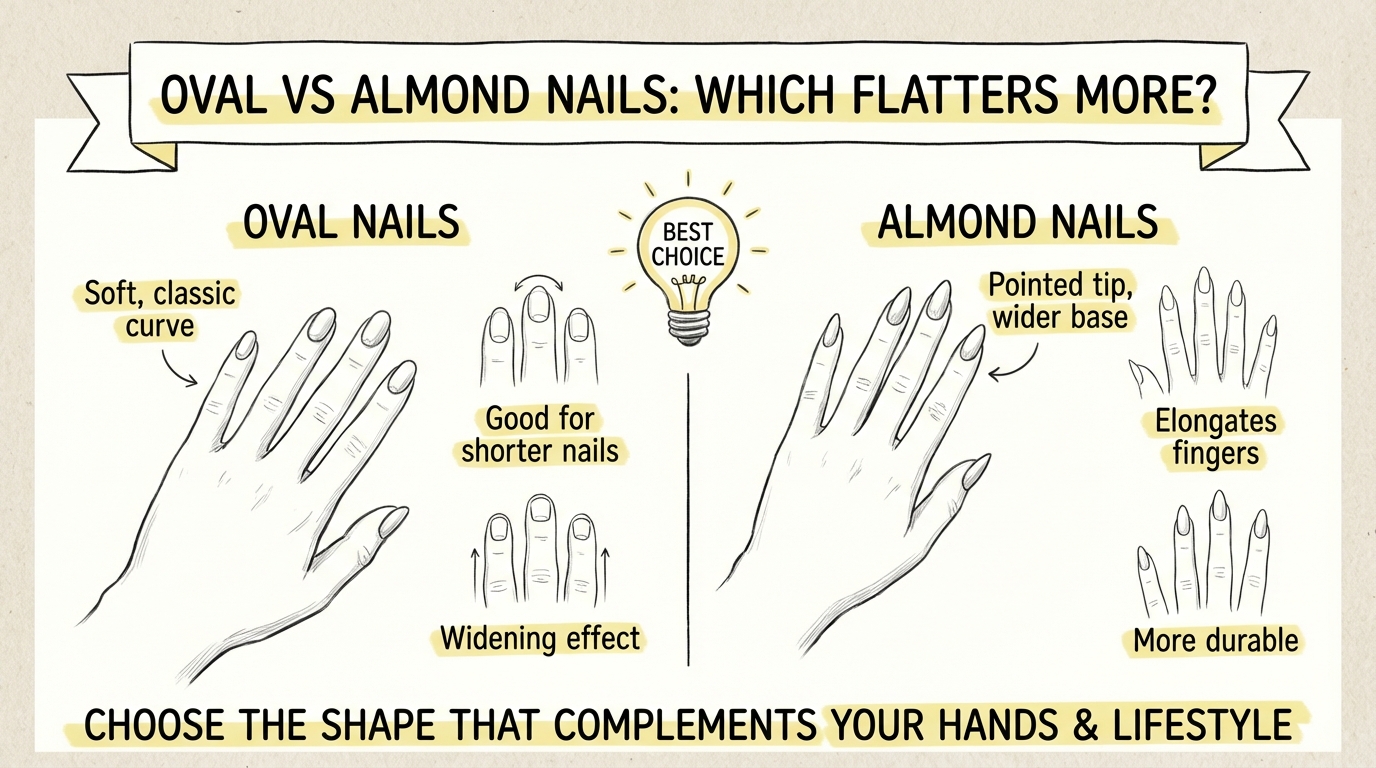
You sit down at the salon. You know you want something rounded and elegant, not boxy. The nail tech asks the inevitable question:
"Oval or almond?"
If you are like most people, you hesitate. They sound similar. They look similar in passing. But on your hands, the difference between an oval nail and an almond nail is significant.
One is the ultimate low-maintenance classic. The other is a high-impact elongator that requires commitment.
Let's break down exactly what makes them different, and how to know which one belongs on your hands.
The Real Difference Between Oval and Almond
It all comes down to the taper.
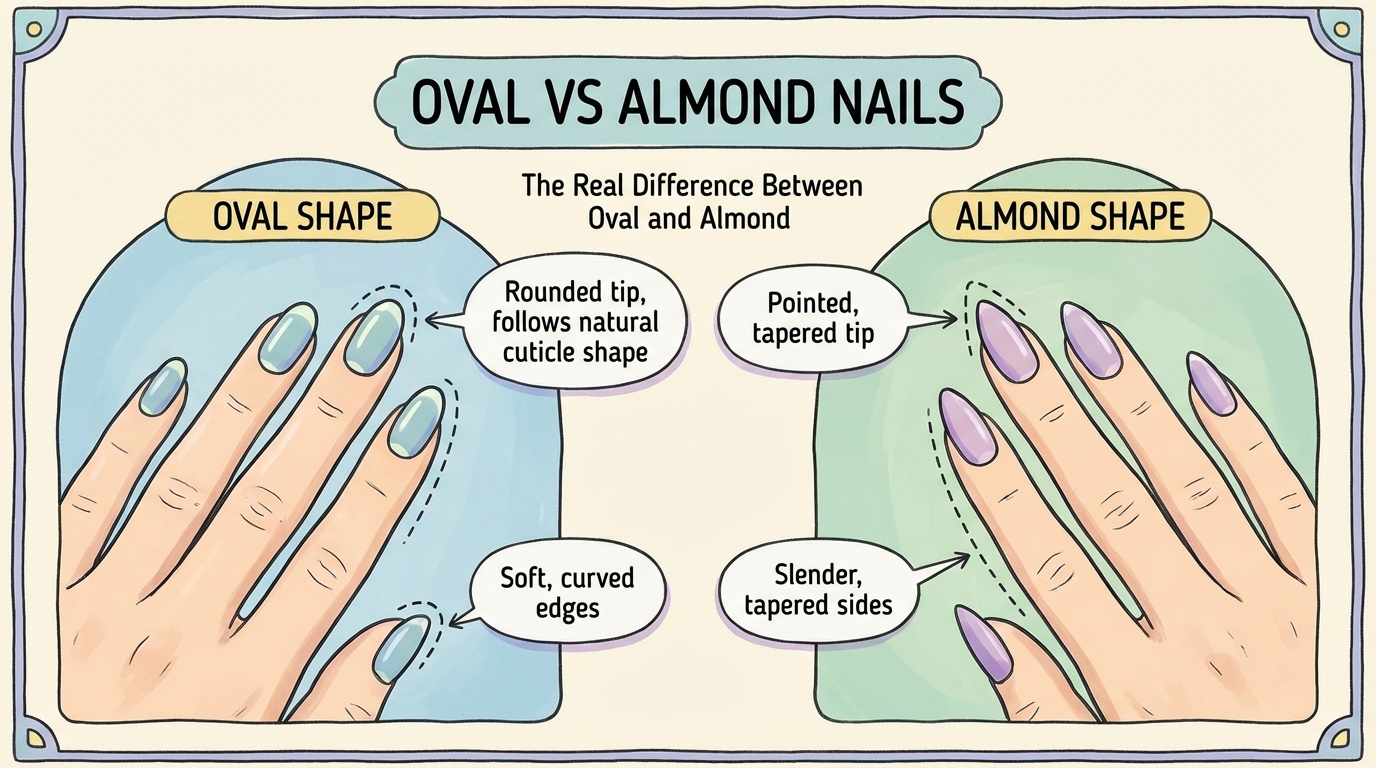
Oval Nails: Think of an oval nail as a rounded rectangle. The sides of the nail emerge from the cuticle running parallel to each other. They only begin to curve inward at the very edge of the finger, creating a soft, semi-circular tip. It mimics the natural curve of the cuticle base.
Almond Nails: An almond nail begins tapering the moment it leaves the side walls of your finger. The sides angle inward continuously, meeting at a soft, slightly rounded peak. It is significantly narrower at the tip than at the base, resembling an actual almond.
The Almond Reality Check: Do You Have The Length?
This is where the "oval vs almond" debate usually gets settled.
You cannot have a true almond shape on very short nails. It physically does not work. Because the almond shape relies on a continuous inward taper to a peak, you need enough "free edge" (the white part of the nail) to create that angle.
If you try to file a short nail into an almond, you will simply get a sharp, awkward triangle, or you will accidentally file it into an oval. To comfortably pull off an almond shape, you need at least 4-5 mm of free edge extending past your fingertip.
Oval, on the other hand, works at almost any length. You can have incredibly short nails and still file them into a neat, clean oval.
How to Make the Choice
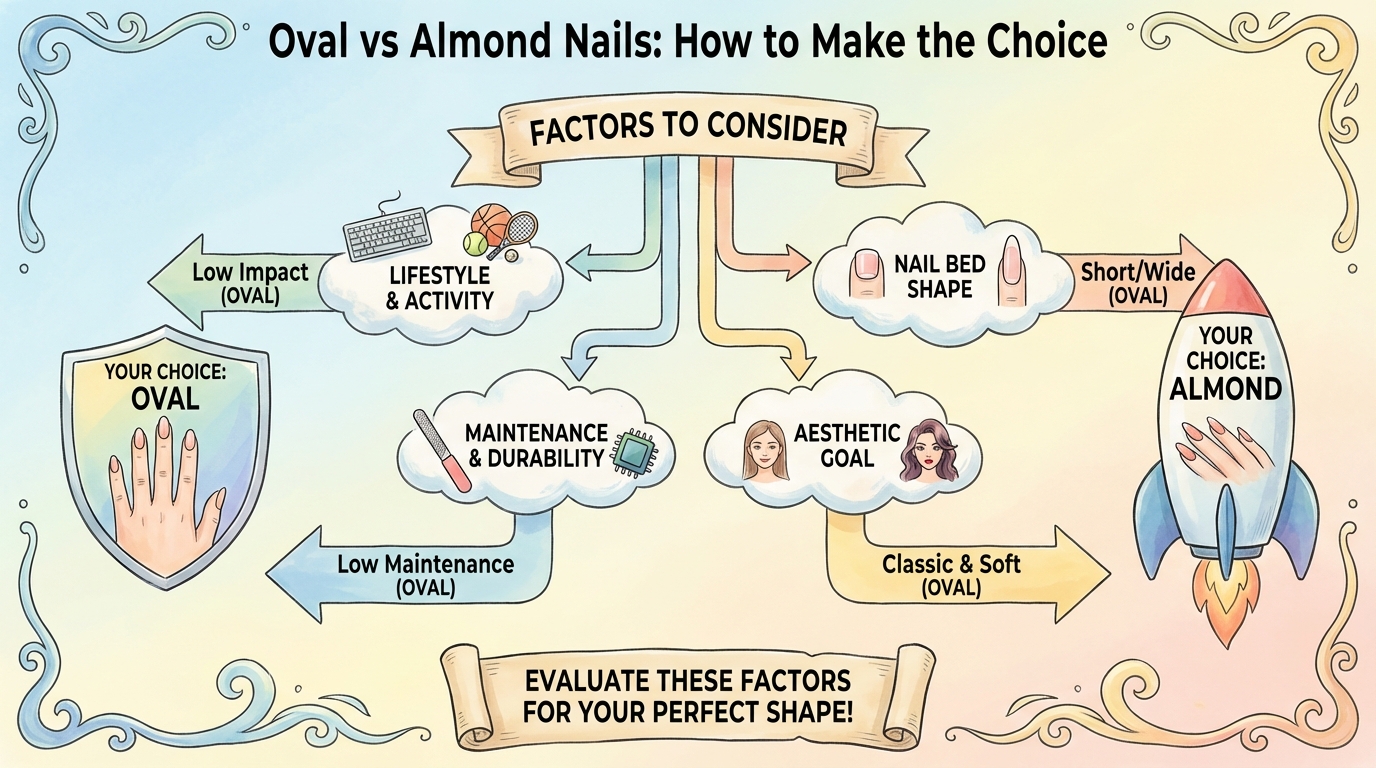
Still on the fence? Let's look at your hands and your life.
Choose Oval If:
- You work heavily with your hands (typing, cooking, nursing) and need a durable shape. Oval is structurally very strong because it maintains the width of the nail bed for longer.
- You prefer short to medium-length nails.
- You want a classic, understated look that goes with everything from jeans to a wedding dress.
- You have wide and long nail beds; oval flatters this natural structure beautifully.
Choose Almond If:
- Your primary goal is to make your fingers look longer and slimmer. The dramatic taper of the almond is the best optical illusion for elongation.
- You are comfortable maintaining longer nails.
- You prefer a glamorous, highly curated aesthetic. Almond shapes immediately elevate a simple polish job.
- You have short fingers or wide nail beds. The taper actively corrects the appearance of width.
The Strength Factor
We have to talk about durability.
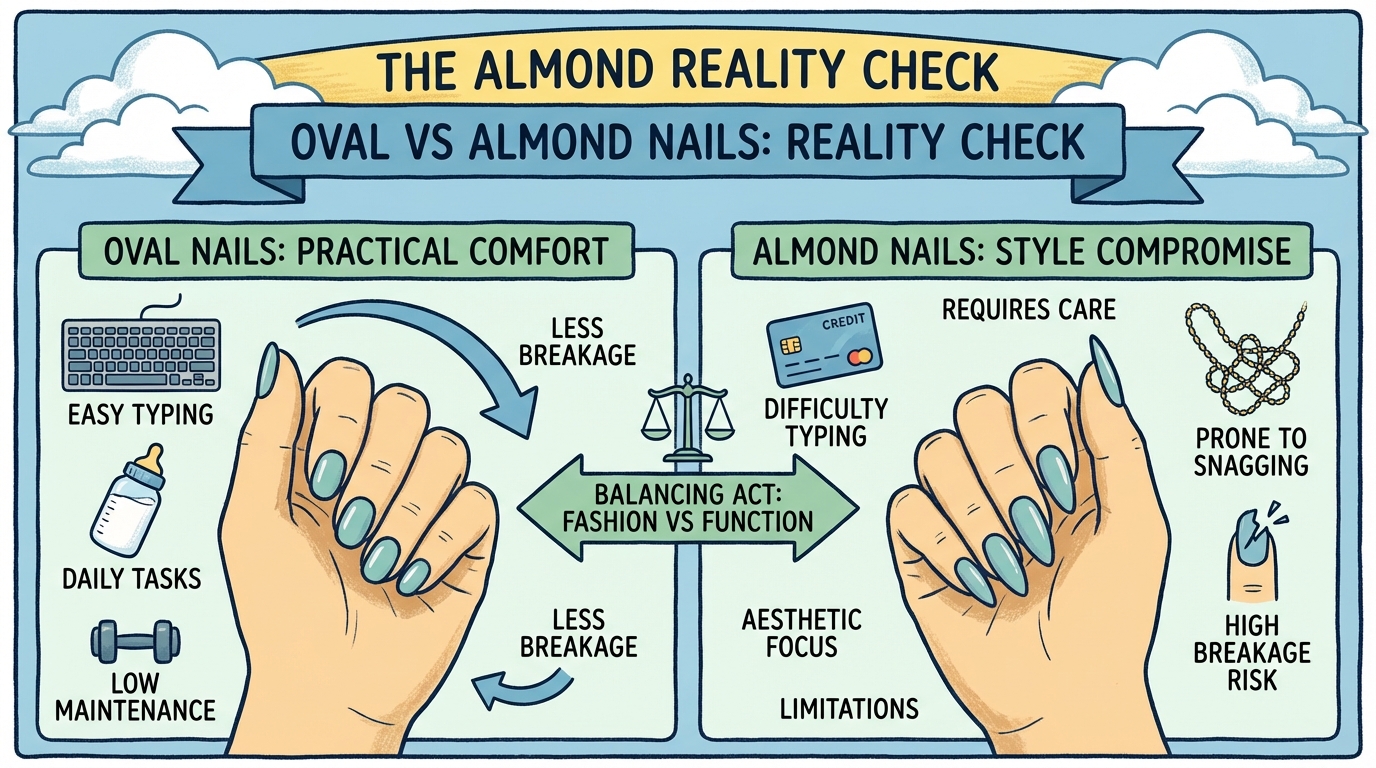
Because almond nails are filed away at the sides to create that dramatic taper, they lose some structural support. The "sidewalls" of the nail—where the nail meets the skin—are compromised. If you rap an almond nail hard against a surface, it is more likely to snap near the tip or tear down the side than an oval nail.
If your natural nails are brittle, thin, or prone to breaking, an almond shape will accelerate those issues. To safely wear almond nails long-term, most people rely on builder gel, dip powder, or acrylics to reinforce the structure.
Oval nails keep the sidewalls intact much longer. If you want to grow out your natural nails without enhancements, oval is the much safer bet.